Event Recap: London 2026

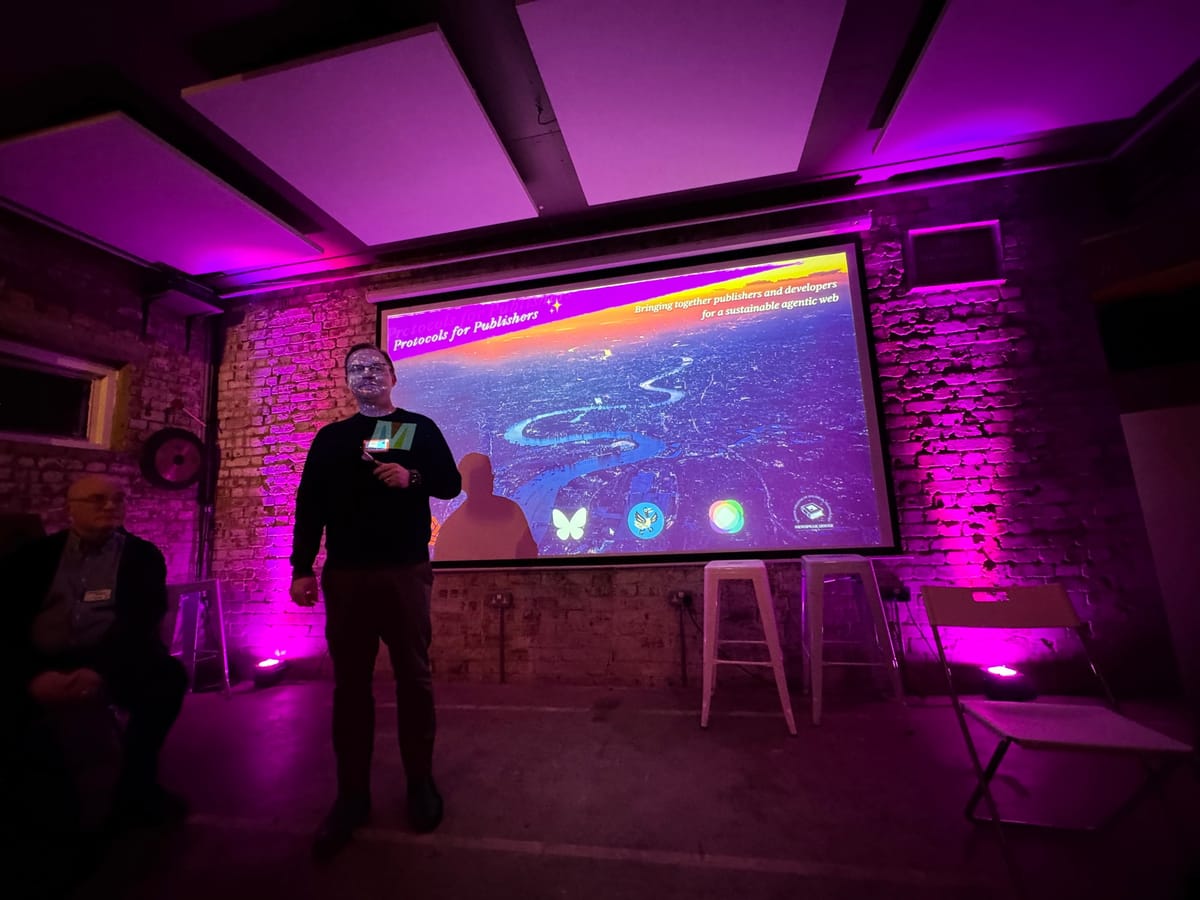
A community of hackers, journalists, bloggers, developers, thought leaders, civil society activists and more gathered at Newspeak House, the independent college of political technology, on February 4th and 5th to participate in the London edition of Protocols for Publishers, discussing future alternatives for publishing on the web.
This is the second in-person gathering of the PfP✨ community, and one that centred on British and European publishers who are operating under a very different political and technological context compared to the US where we had our last meeting.
Showcase Presentations
Ben Werdmuller, who attended last year’s PfP✨ event in NYC as a participant, flew to London to kick off the evening as MC. He framed the evening around bridging the community of publishers and protocol builders to help publications regain direct relationships with their audiences amid declining referrals, falling trust, and algorithmic intermediaries. Ben encouraged cross-conversation between publishers and protocol teams — an opportunity to create a virtuous feedback cycle and not "let technology happen to you."
The first presentation of the evening featured a conversation with Siddhartha Kurapati and Saskia Welch who described the origins of the Bristol Cable, which was founded by volunteers during an era of government distrust. The Cable operates under a reader-owned model with ~2,600 paid members, zero corporate investment, ethical ad policies, and a longform investigative focus on Bristol. Last year they deployed a mobile app built on ActivityPub, the protocol that powers Mastodon, merging publisher and audience into a single social network — one of the more radical experiments in publishing today. Saskia Welch spoke of future work with other communities such as in Quebec.
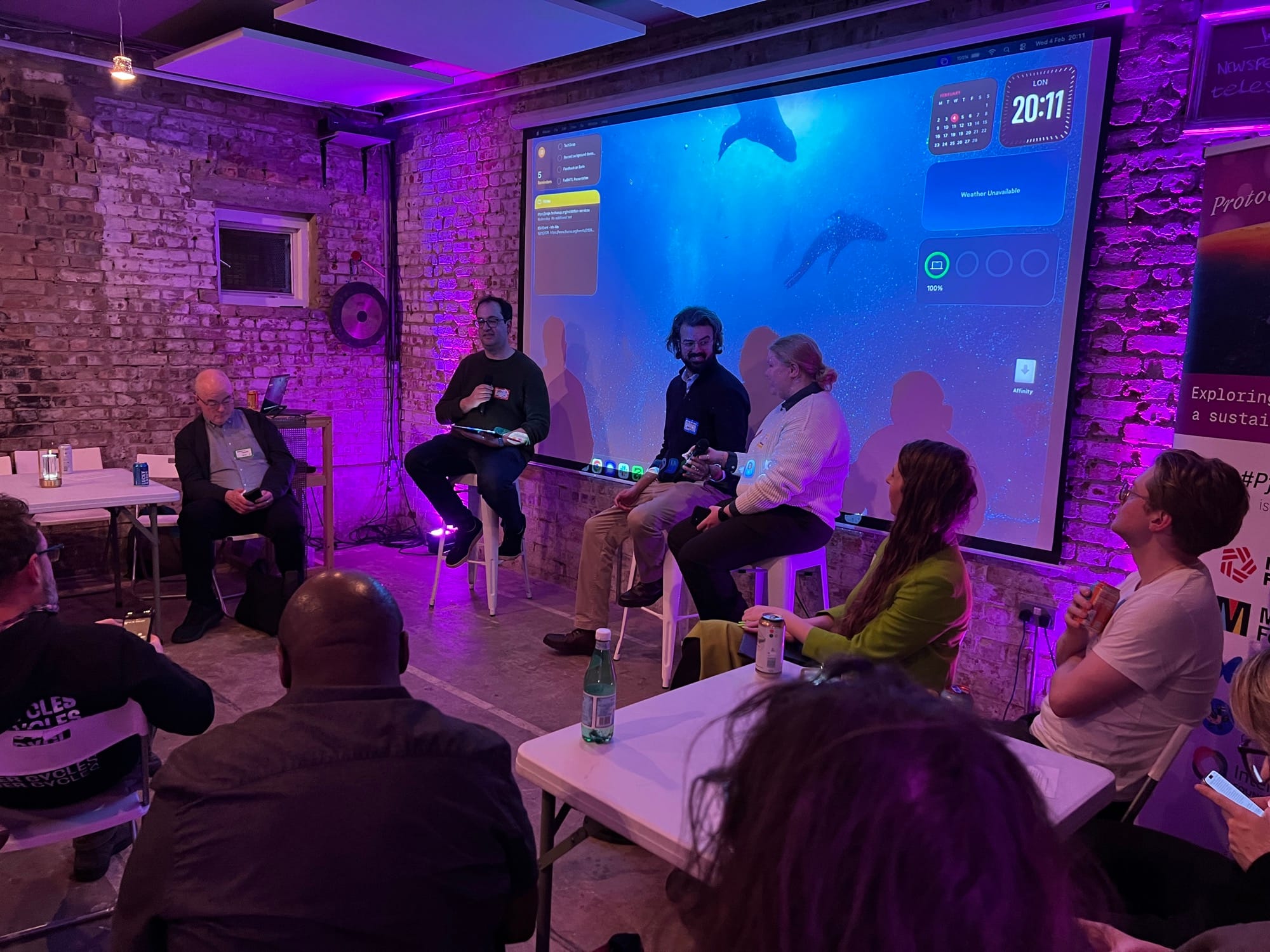
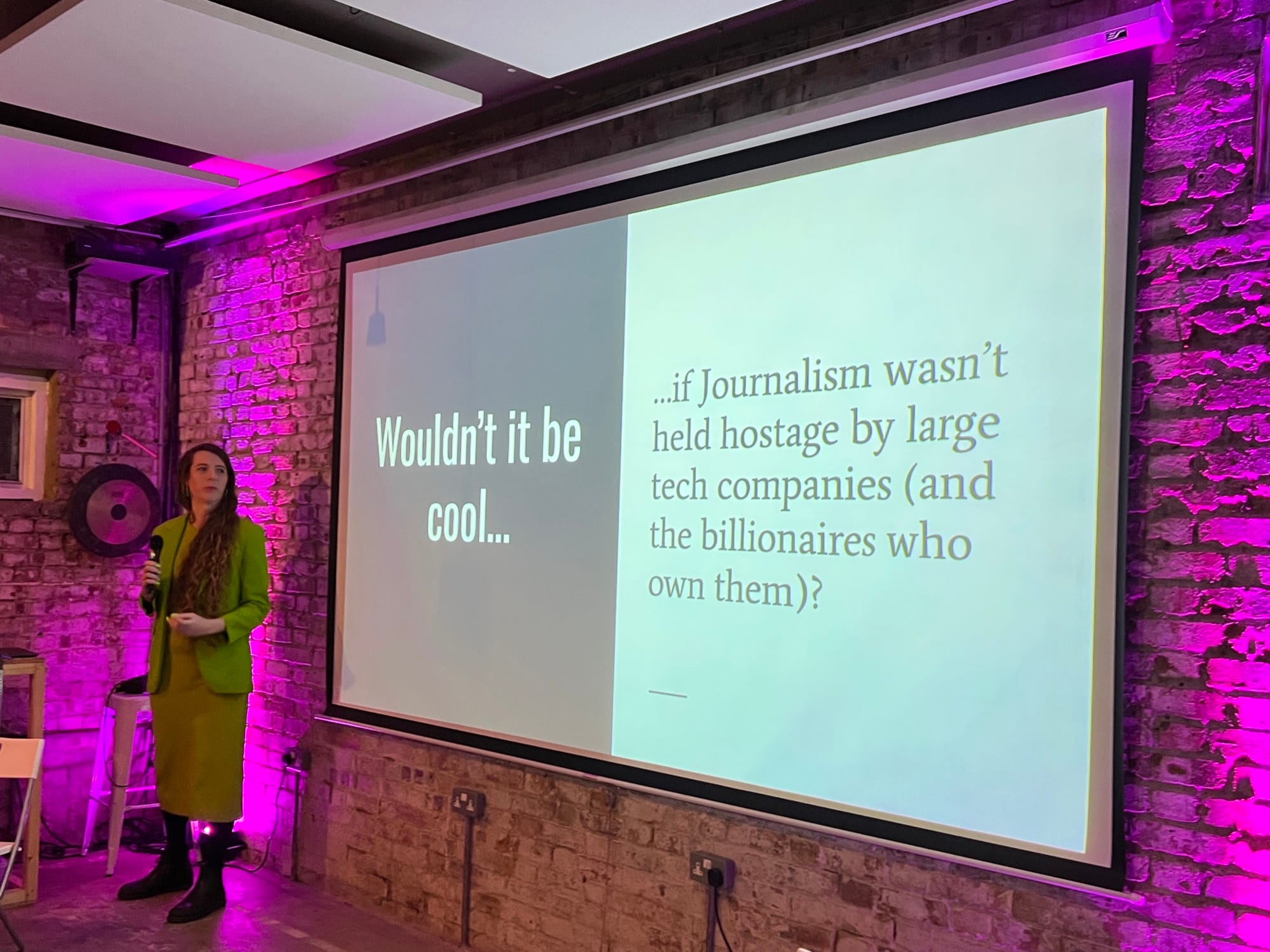
Aendra Rininsland took the stage as the second speaker, arguing publishers can reclaim distribution control today by building custom algorithmic experiences using Bluesky features like custom feeds. She walked through a number of feeds she developed, pointing out that custom feeds are remixable (users can clone and tweak weighting), enable editorial control (pinning or highlighting top content, rotating posts for promos), and allow experiments with monetization (promoted posts in feeds). Aendra's provocations had the PfP✨ crowd in the room laughing and cheering.
Next up was Jeremiah Lee from the Interledger Foundation — which develops an open payments protocol — who came out with a strong statement: "Democracy dies behind a paywall." With a minority actually paying for paywalls, truth does not get the distribution of "alternative facts" which are often peddled for free. Jeremiah used Spotify as a case study to show how more people than ever are paying for music and asked whether the same could happen for news. Jeremiah broke down how the pricing mechanisms of streaming services really work, and described how new payments protocols are driving transaction fees way down, no longer making them a barrier for experimentation.
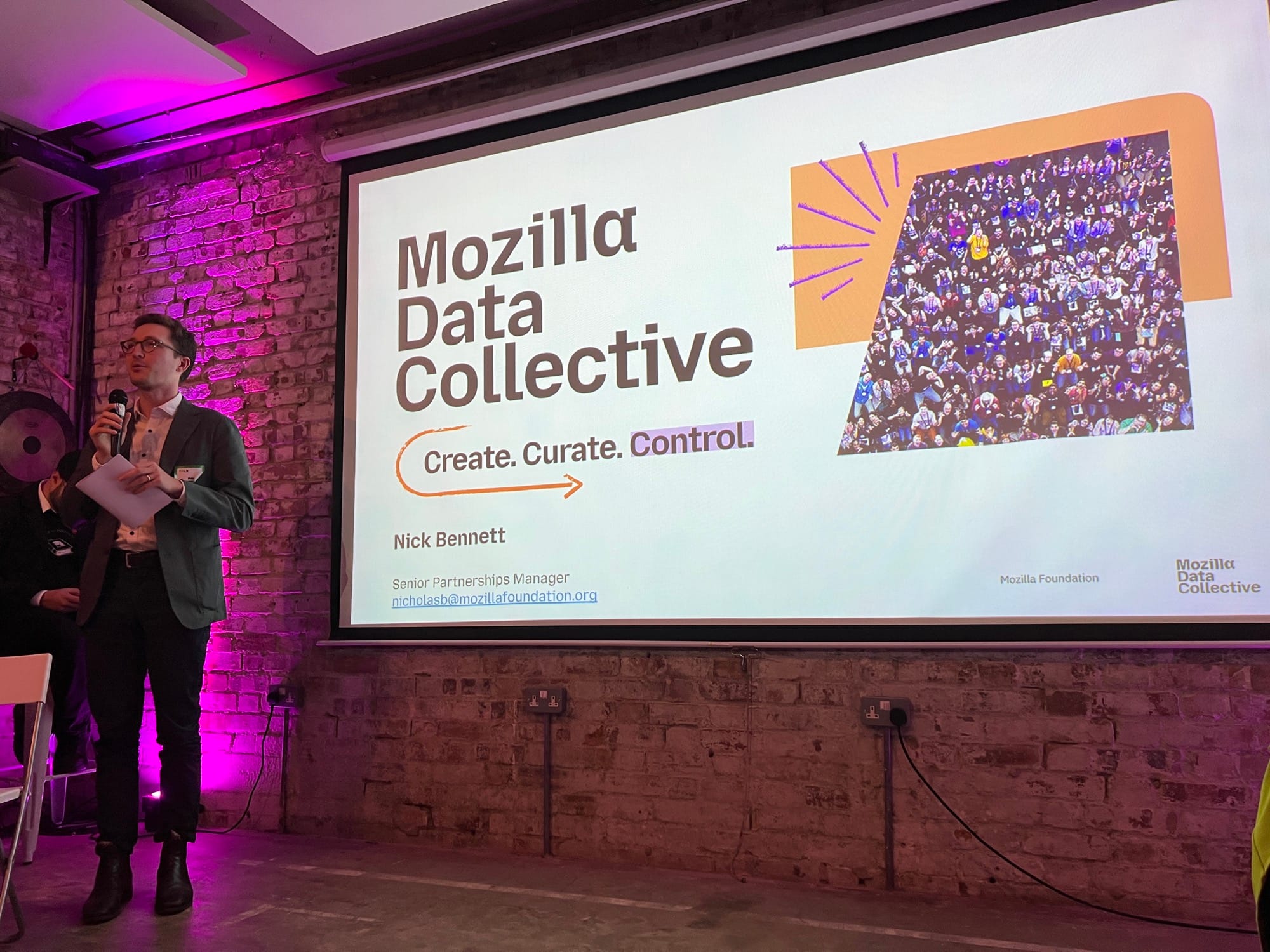
The last presenter of the evening was Nick Bennett from Mozilla Data Collective who described the battlefield of AI scraping on the web, comparing crawler-blocking, data poisoning, litigation, and licensing standoffs to the vaccine hoarding during the pandemic. Expert estimates suggest the internet constitutes less than one percent of the world’s data. How can we let this be the pivot point that everyone depends on? We need new shared, cooperative data infrastructure — akin to COVAX-style sharing — which can produce better, more equitable AI systems. Mozilla Data Collective has found that people want to share, but they also want control. Nick urged creators and publishers in the room to be thoughtful about defensive approaches and consider collaborative solutions that preserve legitimate access while protecting creators.
Each talk was followed by questions from the crowd, after which we gave the audience an opportunity to mix with speakers and one another over drinks and some lovely catering.
Participants have already started publishing their reactions to the event which you can read here:
- Mia Biberović, Editor-in-Chief of Netokracija and Shift Mag, who flew in from Croatia wrote about her insights from the event and why size matters
- Ben Werdmuller gives an excellent overview of the event from the MC's perspective, pointing out multiple times that "journalism can build."
- Ben's post was featured in the Internet Exchange by Audrey Hingle who also attended
- Superbloom writes about what stood out to them. What stood out to PfP✨ in reading Superbloom's piece was the quote:
how [Aendra's] talk connected protocol-level thinking with today's practical needs of journalism and community building.
This is the kind of thinking we are trying to promote with our PfP✨ events.
Stakeholder Forum
The next day a smaller group of 35 publishers and developers came together for a whole day to engage in round-robin discussions intended to uncover opportunities where new protocols could be leveraged. In each semi-structured session stakeholders broke into groups to discuss and report back. The session topics were:
- Discovery & AI
- Monetization & Sustainability
- Audience & Community
During the breakouts publishers had the opportunity to relate their specific day-to-day challenges with protocol professionals asking clarifying questions, gaining insights from publisher domain knowledge, developing real use-cases, and opening up new potential areas of research and development.
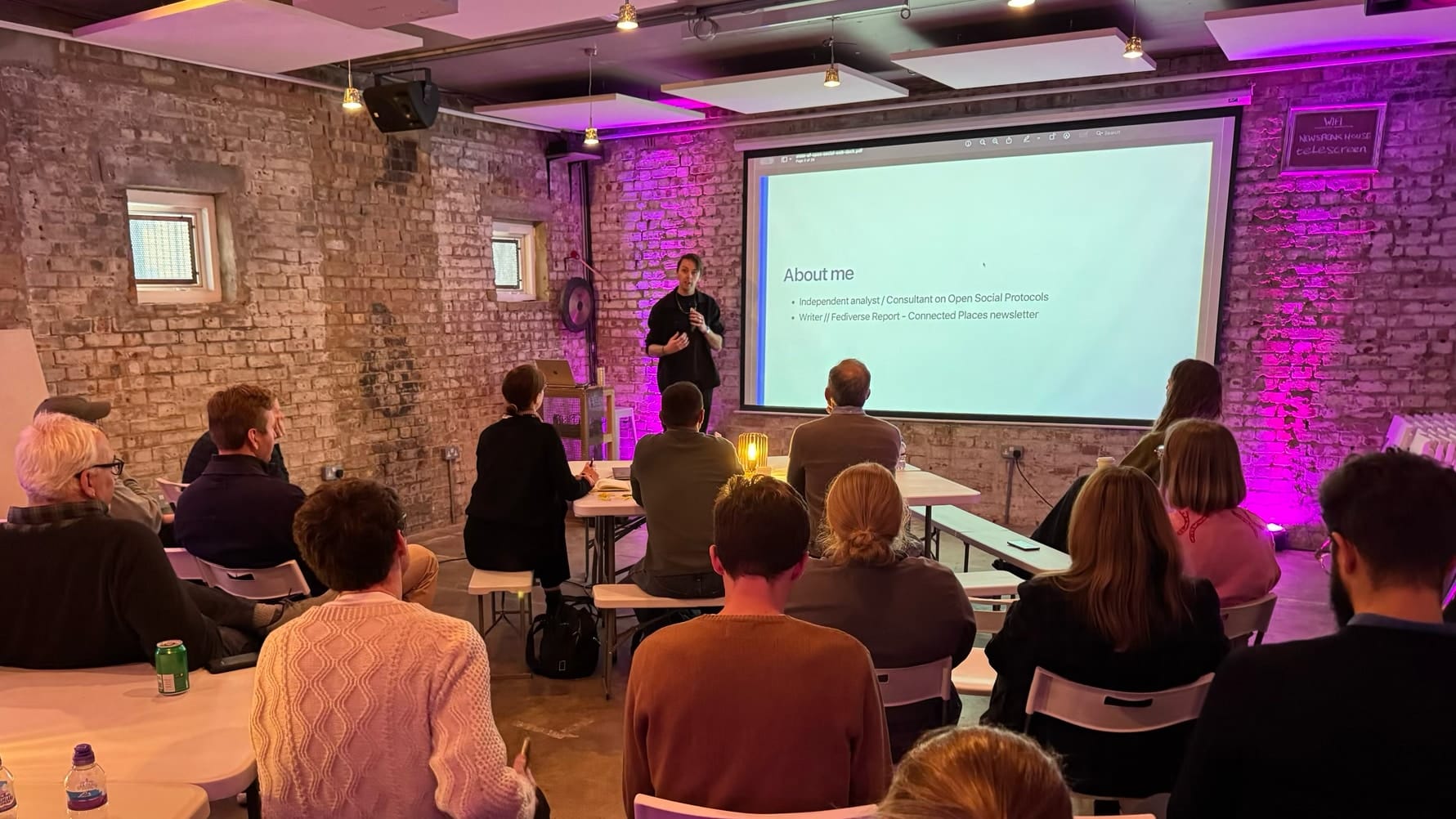
In the middle of the day, after a long lunch allowing plenty of time for networking, the whole group convened for a presentation from the open social analyst Laurens Hof of Connected Places. Laurens broke down the recent innovations in the ActivityPub and AT Protocol ecosystems, gave a comparative analysis, and plotted out their future trajectories with respect to other developments on the web, such as the rise of AI.
In the final session protocol developers in open social, AI, monetization, and digital identity convened to go over what they heard in the sessions they attended. Publisher representatives could provide any extra clarifications as the teams homed in on immediate priorities to pursue once they returned to their organizations. Publishers too were encouraged to develop a short list of actions they could take to help make change at their organizations.
Protocols for Publishers ✨ is a growing community of practice navigating the next platform shift of publishing online in an age of AI-mediation and social media fragmentation.
The conversation will continue online and in-person as participants in the London were invited to start their own meetups hosted at Newspeak House. And they have begun!
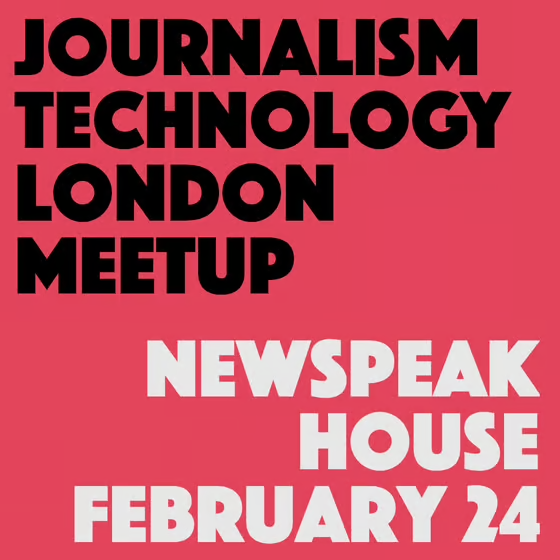
Journalism Technology London Meetup
Tuesday, February 24
7:00 PM - 10:00 PM
The inaugural Journalism Technology London Meetup is meeting at Newspeak House and will feature PfP✨ speaker Aendra Rininsland. This is the first of a series of events aimed at building a community of journalists, technologists, and technical journalists in London!
If you are in the area and want to convene a discussion please contact us so we can help promote your gathering.
Thank you once again to our sponsors including:
And of course Newspeak House for hosting us.