Report from IETF AIPREF working group in Toronto

The Internet Engineering Task Force (IETF) meets three times a year. IETF meetings are usually about 1000 people in-person and the same online, occur over 5 days and have dozens of sessions. In between those flagship meetings many IETF groups will gather for interim meetings, dedicated sessions to focus on work before the next big IETF meeting.
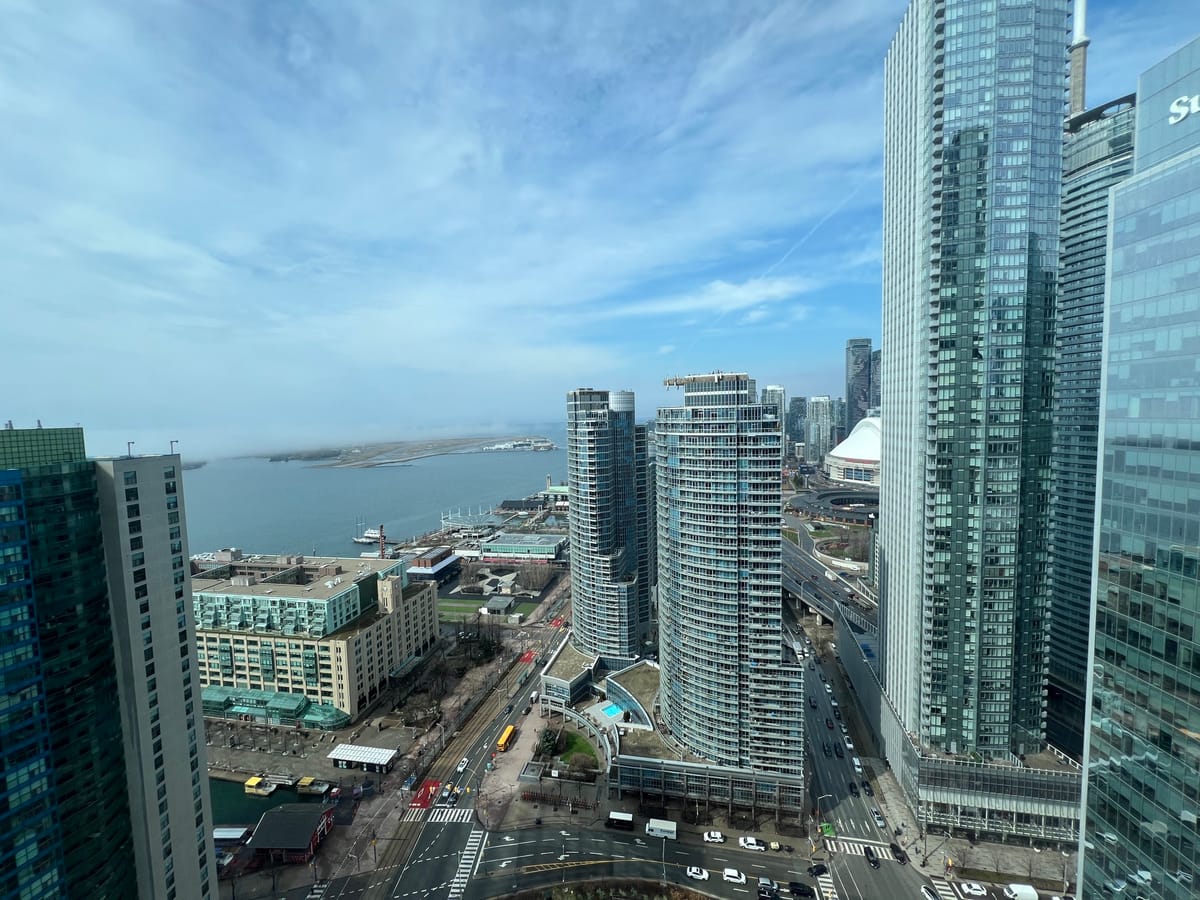
From April 14th to 16th the AI Preferences Working Group (AIPREF) met at the Cisco Innovation Lab in Toronto. AIPREF was chartered a year ago to "standardize building blocks that allow for the expression of preferences about how content is collected and processed for Artificial Intelligence (AI) model development, deployment, and use." Note that this is not a type of DRM or access control. It is intended to be a methodology for publishers to express in ways that cannot be misconstrued how they wish their content to be treated by generative AI models. Robots.txt does something similar but is not expressive enough to cover the types of preferences we can imagine for genAI models. Much of the discussion during the Toronto meeting considered such scenarios. For example, a publisher may prefer their content to not be used for training purposes, but would still like to be crawled for the purpose of AI-assisted search. In other words, to be known by a model but not to contribute to model weights. Another illustrative example is expressing a preference to opt out of corporate model training but being okay with open source model training.
The current task in front of the AIPREF working group is an internet draft that defines "vocabulary for expressing preferences regarding how digital assets are used by automated processing systems." Some of the problematic vocabulary issues include: the definition AI 🙃; what exactly is a "foundation" model; whether it is important to distinguish between training, fine-tuning, and grounding.
The special category for search was a particularly contentious topic as the group considered what AI-mediated internet search might look like in the future, and how that is different from the "ten blue link" ideal from a bygone age of the internet. When a chatbot conducts a search and pulls a link and a description from the web, how long can the snippet be? What constitutes a "substantial" change to content when it is summarized for a user? Content transformation for translation or accessibility use cases are acceptable, right? Right?
Having a large group of people collaborate on the wording of a document is not an easy task. In the room were about 30 people with 30-50 more participating online throughout the three day event. Facilitated by experienced IETF Chairs Mark Nottingham and Suresh Krishnan, the discussion progressed well under the IETF's system of rough consensus, with the chairs asking open questions and occasionally running polls to keep things moving. The atmosphere was more convivial than one would expect when at one end of the room huddled publishers like News Corp, NBC, and Condé Nast facing reps from Anthropic, Google, and Microsoft other end of the room. Other small publishers and open protocol advocates like PfP✨ were in attendance, as well as non-profits like Common Crawl and Creative Commons, and big name technology firms such as Cloudflare and Mozilla. The percentage of lawyers in the room was significantly higher than your run-of-the-mill technical standards meeting.
Participating in standards meetings like AIPREF is important for Protocols for Publishers ✨. It ensures we we know the current state of the art (and can share that with the PfP community), but more importantly can communicate the needs of the publisher community as gathered at PfP stakeholder events. The Executive Summary for the London Stakeholder Forum (recap here) contained 14 action points distilled out of the conversations in the room. This type of user feedback is very much appreciated by standards-making organizations who want to hear from the organizations that will ideally use their standards in the future.
If you would like to watch the meeting each day has been published on YouTube (a mere 17 hours total of content for your enjoyment 🙃)
Also check out Laurent Le Meur's writing about his experience of the interim meeting here →
If interested in participating at the next meeting you can sign up at https://datatracker.ietf.org/group/aipref/ and check out the AIPREF vocabulary draft in its current form here. Revisions will continue via the mailing list until the next virtual meeting in July, with the next hybrid meeting to take place at the IETF 126 in Vienna.
🎟️ Even more Events!
April was a busy month for events:
- FediForum Spring 2026 happened over 3 days with a mix of talks and demos
- WikiCredCon 2026 the Internet Archive
- many PfP✨ London participants attended the Interntational Journalism Festival in Perugia, Italy
- the Online News Association met in Chicago
- Betaworks had a very PfP conversation in NYC
- the Local Journalism Researchers Workshop in DC
And there are lots more coming up:
- Hacks/Hackers' AI x Journalism Summit is next week in Baltimore.
- tbd/con: "the future of ai is tbd. so is everything else." This is a free online conf in February put on by friends who want to dig into various AI topics related to the infosphere. Apply by May 31st 2026.
- The Digital Publishing Summit is happening June 8-9th in in Prague, Czechia and features discussion on interoperable standards relevant to AI licensing, DRM, discovery, and commerce.
- Although more enterprise-y, we will be at WebSummit Vancouver if you want to meet up!
And of course, some events won't happen 😢:
Wish we could be at them all.
🤖🖊️ Authour's Importance in the publishing process
"We find that by mid-2025, roughly 35% of newly published websites were classified as AI-generated or AI-assisted, up from zero before ChatGPT's launch in late 2022." https://www.404media.co/study-finds-a-third-of-new-websites-are-ai-generated/
Anil Dash writes about the existential threat to the open web posed by AI, but ends on an upbeat note: "Ultimately I think, if given the choice, people will pick home-cooked, locally-grown, heart-felt digital meals over factory-farmed fast food technology every time." https://www.anildash.com/2026/03/27/endgame-open-web/
Cloudflare released a diagnostic tool that runs 16 checks across five categories to gauge a site’s compatibility with AI agents https://nohacks.co/blog/cloudflare-agent-readiness-score
Hypha lays out the challenges of publishing in an agentic world using a 4-part framework: Visibility, Rights Expression, Settlement, Enforcement https://hypha.coop/dripline/navigating-media-publishing-in-an-agentic-world/
While the British Medical Journal doesn't allow AI use in peer reviews, it has a whole suite of AI applications for its publishing workflow, which can introduce automation bias. https://scholarlykitchen.sspnet.org/2026/04/08/ai-rollout-is-a-people-problem-a-pulse-on-all-things-ai-part-2/
Steven Levy, legendary tech reporter, agrees that that "the how" is important. https://www.wired.com/story/backchannel-the-problem-with-letting-ai-do-the-writing/
On the otherhand, NeurIPS will allow authours to opt in to PAT, a Gemini-powered AI feedback tool that highlights technical gaps and clarity issues in papers. https://blog.neurips.cc/2026/04/21/neurips-supports-authors-with-googles-paper-assistant-tool-pat/
🫴 💵 Cashflow
DCN shares a playbook for the Google Zero era with tips including "produce less content" and "build content that AI can’t replicate" https://digitalcontentnext.org/blog/2026/04/09/the-publishers-playbook-for-the-google-zero-era/
The American Prospect removed all programmatic ads citing surveillance concerns, poor user experience, and platform concentration in the ad supply chain. They will move to reader support part of the trend towards monetization (and content!) strategies that prioritize direct relationships. https://prospect.org/2026/04/06/why-were-removing-our-programmatic-ads/
Trustfnd, the newsletter bundling service for Ghost and Beehiiv users, has been powering a bunch of new experiments in creator journalism monetization. Unfortunately Trustfnd doesn't list all the bundle deals yet, so you will have to check with your favourite newsletter writers to see if they are participating. https://www.niemanlab.org/2026/04/three-newsletters-for-the-price-of-1-5-independent-journalists-experiment-with-a-bundle/
Some numbers on participating in OpenAI's adtech platform: ticket to entry has dropped from $250 to $50K, CPMs are $60
https://digiday.com/marketing/openai-has-quietly-launched-its-ads-manager-as-it-races-to-build-out-its-ads-business/
YouTube passed Disney to become the world's most valuable media property. Still owned by Google. https://www.hollywoodreporter.com/business/digital/youtube-worlds-largest-media-company-2025-tops-disney-1236525130/
Mastodon secures €614k from Sovereign Tech Agency for ActivityPub end-to-end encryption https://blog.joinmastodon.org/2026/04/sovereign-tech-agency-funding/